Coca Cola - OOH
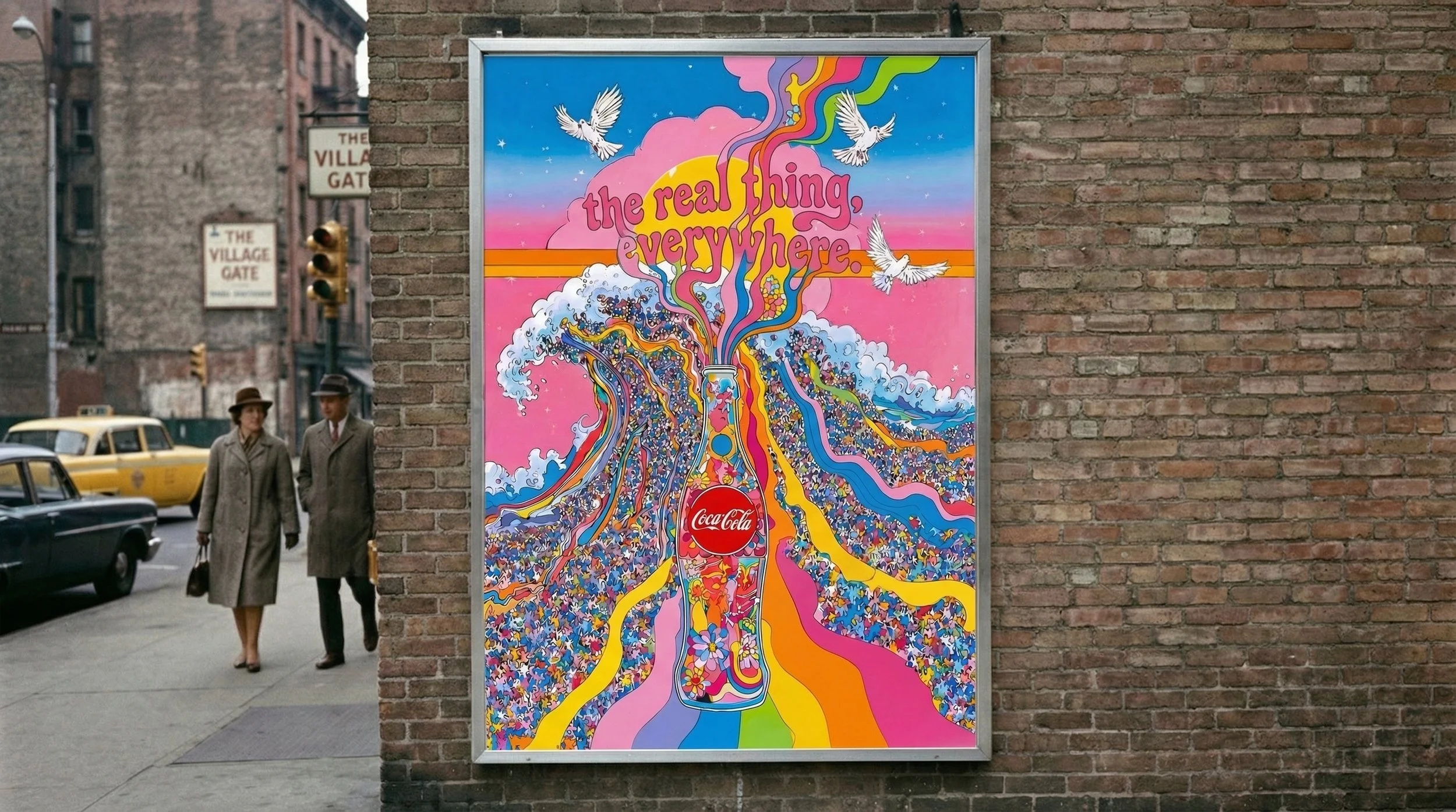
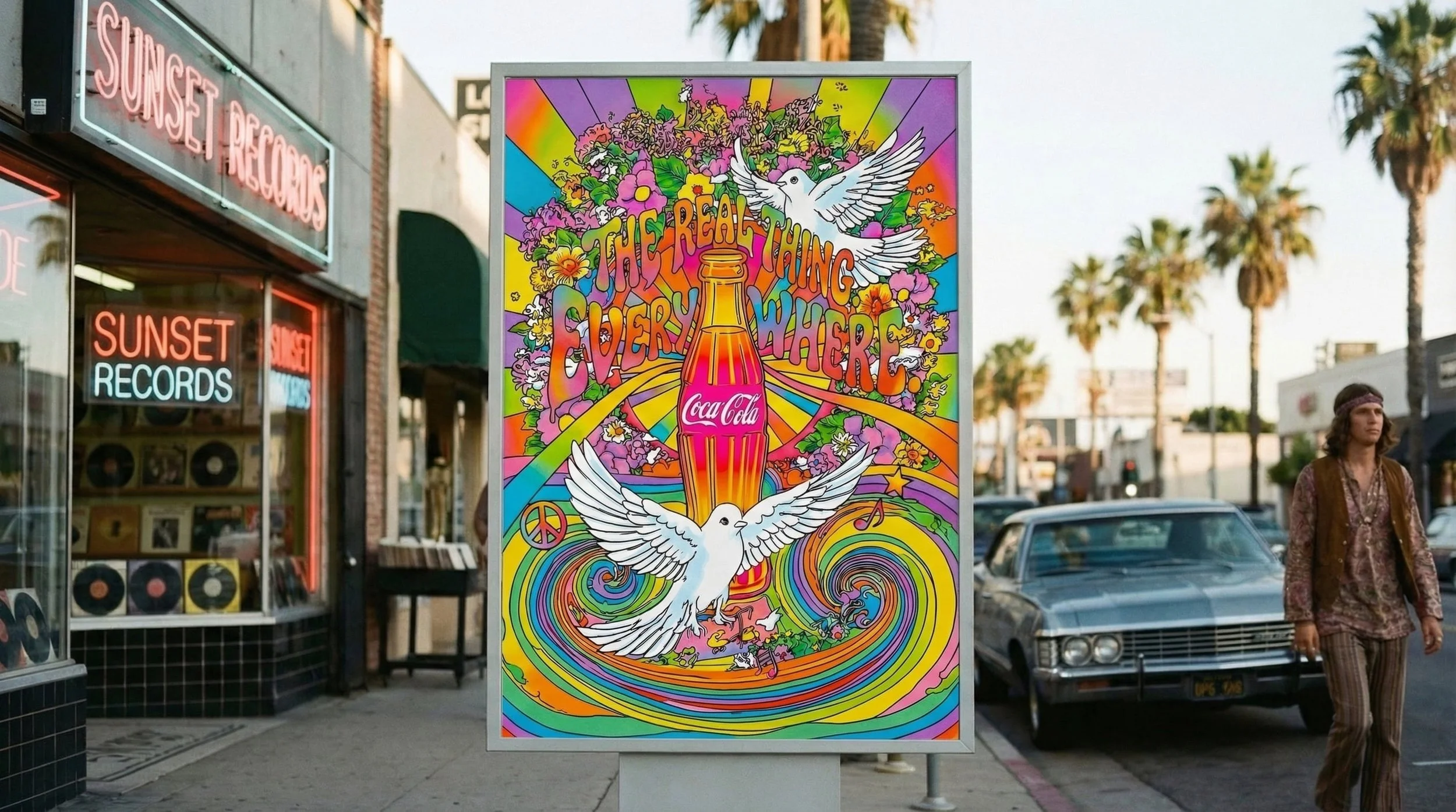
the real thing. everywhere.
The 1960s were a collision of forces: cultural revolution, the rise of pop youth culture, a world getting smaller, and civil rights reshaping what “together” could mean.
This project explores how Coca-Cola would communicate in the 1960s if it aimed to feel both iconic and genuinely inclusive.
Concept
Rather than forcing a single aesthetic to convey everything, I selected two artists that authentically represent the era’s duality:
A documentary photographer voice to illustrate globalization as reality.
A psychedelic pop artist voice to symbolize cultural revolution.
Although this is designed in 2026, the executions are reimagined using generative tools to reflect the language and craft of the time.
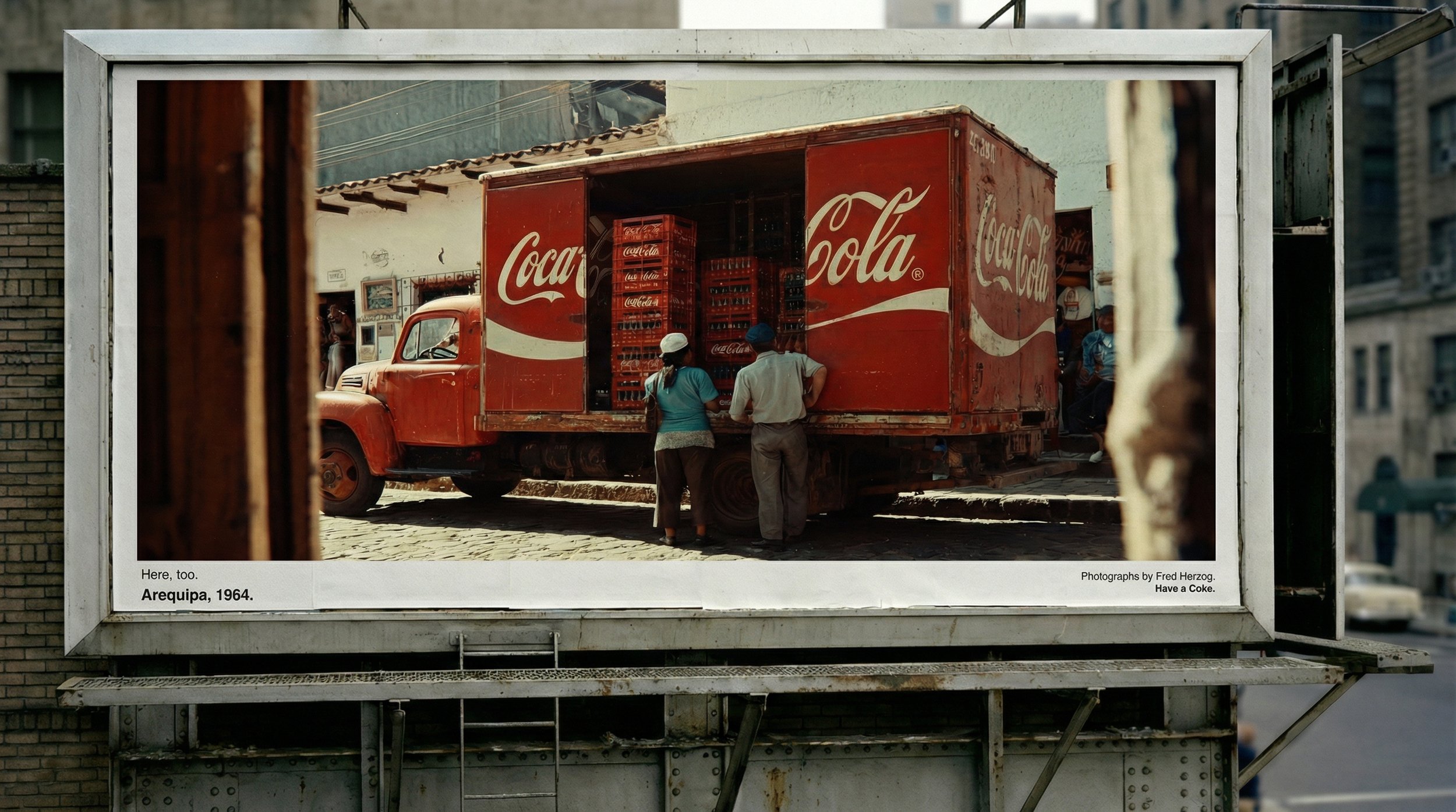
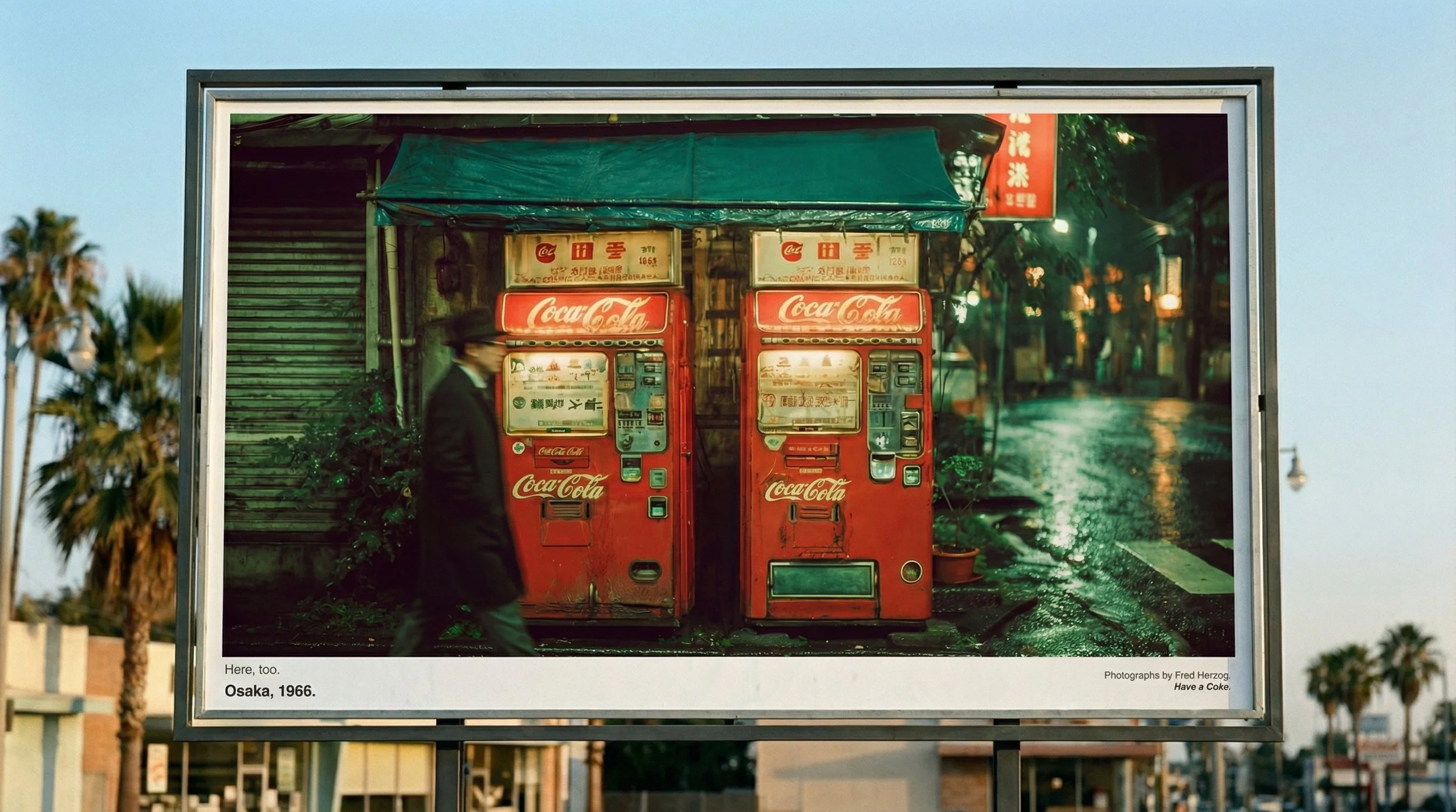
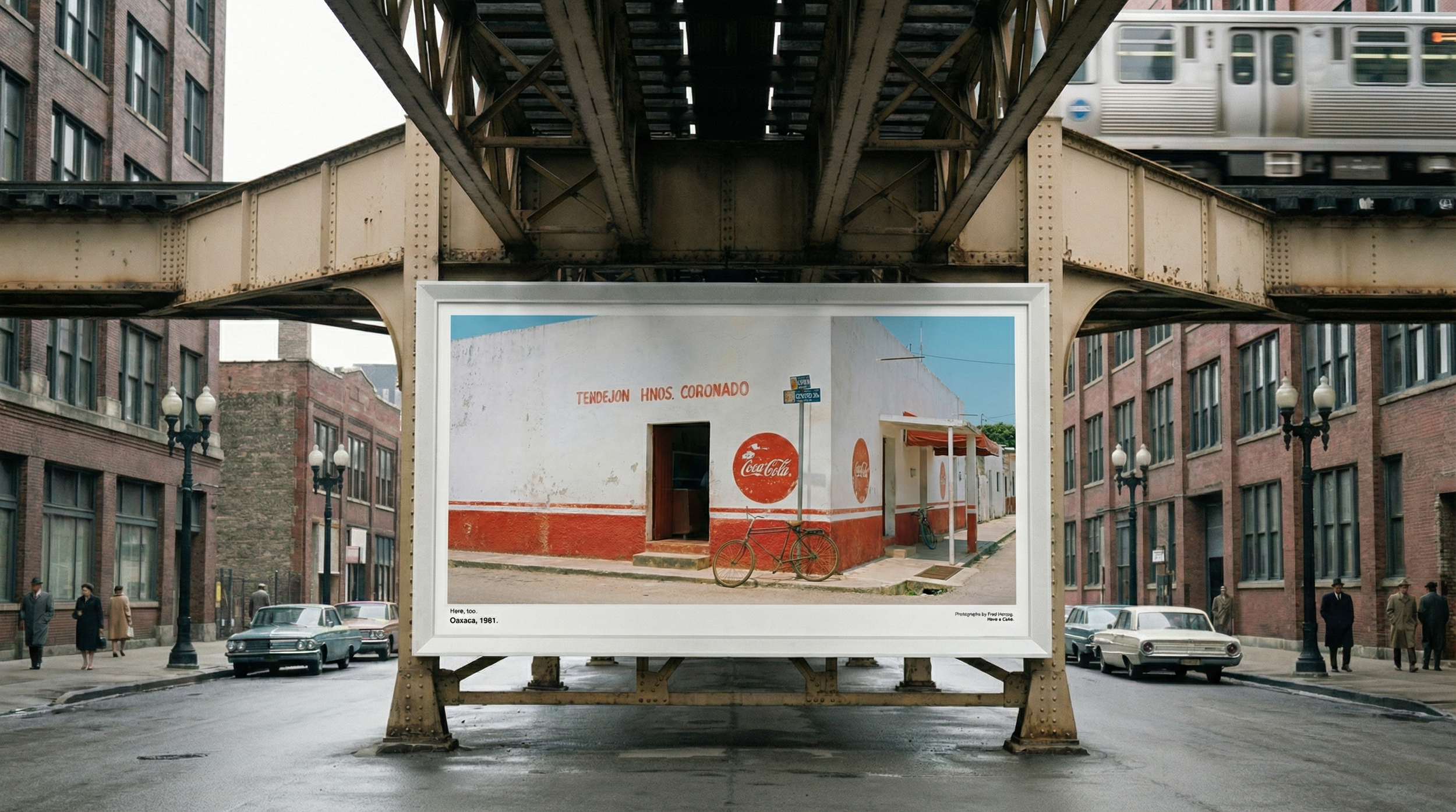
This is a documentary-style out-of-home series showcasing Coca-Cola’s global presence as evidence rather than as traditional advertising. Each piece in the series is designed like a magazine page, complete with borders, grids, captions, and details about the place and year. The aim is to present the content as reportage rather than marketing.
The series is inspired by the photography of Fred Herzog, known for his colorful documentary style and focus on ordinary urban life, signage, and everyday details. The images featured are generated and recreated to align with Herzog's photographic style, paying careful attention to framing, lighting, color variation, and texture. This is achieved through generative imaging techniques.
The system concludes with a subtle Coca-Cola sign-off, maintaining an editorial tone:
“Here, too. / [Place], [Year]. / Photographs by Fred Herzog / Have a Coke.”
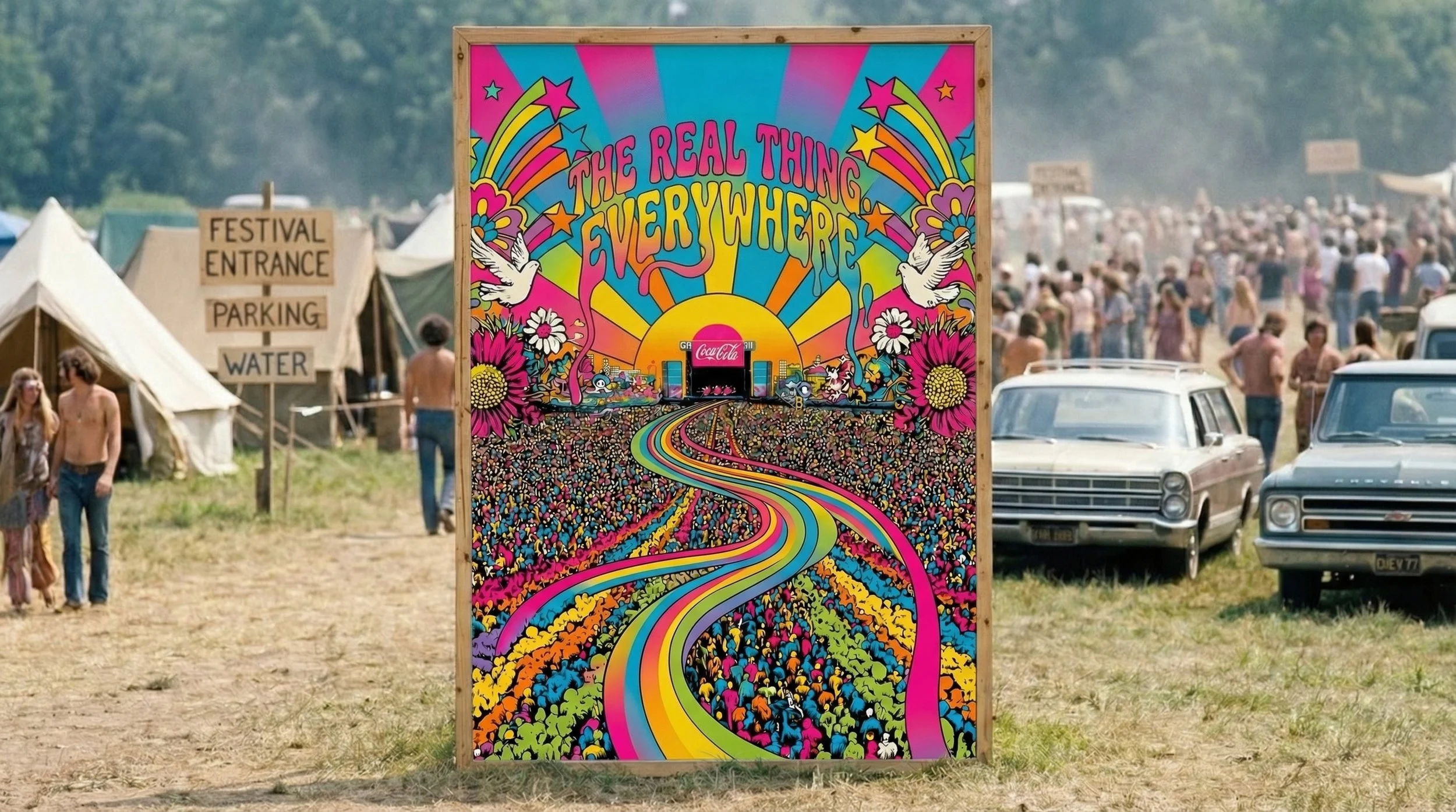
A poster series running in parallel captures the optimism of the decade: love, music, movement, and collective energy through bold, symbolic imagery. The visual style is inspired by Peter Max's cosmic pop vocabulary, incorporating elements such as saturated gradients, ribbon rays, sun discs, doves and a sense of celebratory motion.
This series features illustrations attributed to Peter Max, and the artwork was recreated in 2026 using generative tools to translate the distinctive graphic style into a clean, contemporary format.
The aim is to build a plausible poster system that Coca-Cola might have commissioned during that era, executed with today’s production capabilities.
The project approaches the 1960s as a communication challenge. It explores what it would mean for Coca-Cola to maintain its iconic status during a time when the definition of everyone was evolving. The campaign responds to this question by combining two complementary elements: documentary evidence and a celebration of popular culture.